Do Pets Grieve? How Dogs, Cats, and Other Animals React When a Companion Dies
74% of dogs and 78% of cats showed behaviour changes after a companion animal died. Dogs played less, ate less, and became more clingy. Cats increased vocalisation by 93%. Yes, pets grieve — and the evidence is more specific than most people realise. Here's what to expect and how to help.
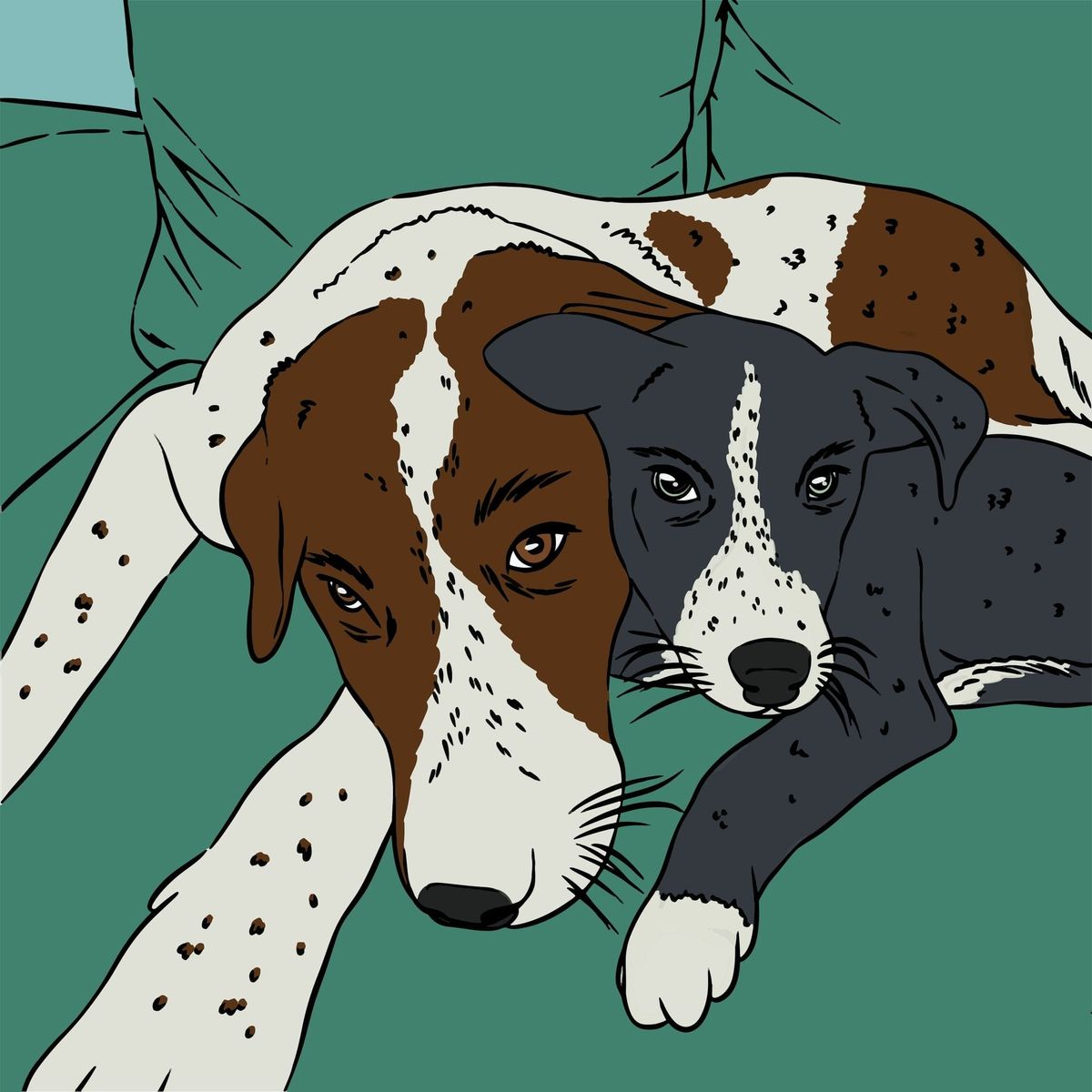
Yes. Pets grieve — and the evidence is more specific than most people realise.
Research surveying bereaved multi-pet households found that 74% of dogs and 78% of cats showed behaviour changes after a companion animal died. Of those who changed, 82% of dogs and 97% of cats became more clingy or affectionate toward their owners. Dogs played less (57%), became more attention-seeking (67%), slept more (35%), and ate less (32%). Cats increased their vocalisation frequency (93%), increased their volume (92%), and many withdrew or hid.
These aren't anthropomorphic projections. They're measured, replicated changes in behaviour that align with what grief researchers call attachment disruption — the same mechanism that drives grief in humans. Your surviving pet doesn't understand death the way you do. But they understand absence. They understand that the being who shared their space, their food, their bed, their daily rhythms is no longer there — and they respond to that absence in ways that are visible, measurable, and sometimes medically dangerous.
This guide covers what grief looks like in dogs, cats, birds, rabbits, and other species, the health risks you need to watch for, whether to let your surviving pet see the body, and how to help them through the adjustment.
Dogs
Dogs are social animals with strong attachment systems, and they form bonds not just with humans but with other animals in the household — including cats, rabbits, and birds. When a companion dies, the disruption is real.
What you may see
Increased clinginess. 82% of dogs who showed behaviour changes became more affectionate and attention-seeking toward their owners after a companion's death. Your dog may follow you from room to room, whine when you leave, or refuse to be alone in spaces they were previously comfortable in.
Reduced play and activity. 57% played less. 46% showed reduced overall activity. A dog who used to bring you toys, initiate play, or be enthusiastic about walks may become listless and uninterested.
Sleeping more. 35% slept more than usual. This may look like depression — and functionally, it is. The dog is withdrawing from engagement with a world that has changed.
Eating less. 32% showed reduced appetite. For most dogs, this resolves within a few days. If it persists beyond 48 hours or is accompanied by vomiting or diarrhoea, call your vet.
Searching behaviour. Your dog may go to the spots where the deceased pet used to rest, wait by the door, sniff furniture or bedding, or look around the house as though expecting the other animal to appear. This is one of the clearest indicators that your dog is registering the absence.
Increased vocalisation. 30% vocalised more — whining, howling, or barking without obvious cause. This may be most pronounced during times when the two animals were typically together (evenings, mealtimes, walks).
Restlessness or pacing. Some dogs become agitated rather than withdrawn — unable to settle, pacing between rooms, checking and rechecking the house.
How long it lasts
For most dogs, the most intense behaviour changes last two to eight weeks, with gradual return to baseline over two to six months. Some dogs adjust within days. A smaller number show changes for six months or longer, particularly if they had an especially close bond with the deceased animal or if their daily routine was heavily structured around the other pet (joint walks, shared sleeping spots, tandem feeding).
When to worry
Call your vet if your dog refuses food for more than 48 hours, shows persistent vomiting or diarrhoea, becomes aggressive without provocation, or shows signs of severe separation anxiety (destructive behaviour, self-harm, continuous distress vocalisation when left alone). These may require medical or behavioural intervention.
Cats
Cats are often assumed to be indifferent to other animals in the household. The data says otherwise.
What you may see
Increased clinginess. 97% of cats who showed behaviour changes became more clingy and demanding of human attention. This is the single highest rate across all species and all behaviours studied. Your independent cat may suddenly want to be on your lap, follow you to the bathroom, or sleep pressed against you.
Increased vocalisation. 93% increased the frequency of their calls, and 92% increased the volume. This may manifest as persistent yowling — especially at night, especially in rooms where the deceased pet spent time. Some owners describe it as the cat "calling" for the missing companion.
Appetite changes. Many cats eat less after a companion's death. Some stop eating entirely. This is the most dangerous behaviour change in cats and requires immediate attention (see the health risks section below).
Hiding or withdrawal. Some cats respond to loss by disappearing — spending extended time under beds, in closets, or in locations they don't normally use. This is especially common in cats who were bonded to the deceased animal and less bonded to the humans in the household.
Sleep changes. Sleeping more or less, or sleeping in unusual locations — particularly the spots where the deceased pet used to rest.
Aggression. Some cats become aggressive toward remaining pets or toward humans after a companion's death. This may reflect stress, a disruption in the household social hierarchy, or redirected anxiety.
How long it lasts
Cat grief behaviours typically last two to six months, though some cats adjust more quickly and others take longer. An Italian study found most cats returned to baseline within this window. Cats who were closely bonded to the deceased (sharing sleeping spots, mutual grooming, synchronised routines) tend to grieve longer.
When to worry — the hepatic lipidosis warning
If your cat stops eating for more than 24–48 hours after a companion's death, call your vet. This is not an overreaction. Cats who stop eating are at risk of developing hepatic lipidosis (fatty liver disease) — a potentially fatal condition in which the liver begins to fail as the body mobilises fat stores in the absence of food intake. Hepatic lipidosis can develop within days of a cat refusing food and can be fatal without treatment.
This is the single most important piece of information in this guide for cat owners. A cat grieving a companion who stops eating is not just sad. They are at medical risk. Your vet may recommend appetite stimulants, assisted feeding, or further evaluation to prevent a life-threatening complication.
Birds
Social birds — parrots, cockatiels, budgies, and other species that form pair bonds — can grieve intensely when a companion dies.
What you may see
Increased calling and vocalisation. Contact calls, distress screeches, or persistent loud calling — especially at times when the pair was normally active together. The bird is calling for a companion who will not answer.
Feather plucking. Self-destructive feather-plucking is one of the most concerning grief responses in birds. A bonded bird who loses their mate may begin aggressively pulling out their own feathers — sometimes to the point of skin damage and infection. This is a recognised stress response in parrots and requires prompt veterinary attention.
Reduced appetite. Refusing favourite foods, dropping weight, becoming lethargic. In small species (budgies, finches, canaries), even modest weight loss can be life-threatening because their body mass is so low.
Aggression or agitation. Some grieving birds become more aggressive — toward humans, toward remaining birds, or toward their environment (biting, lunging, destructive behaviour with cage items).
Pacing and restlessness. Moving back and forth on the perch, climbing cage bars repeatedly, or other stereotypic behaviours.
How long it lasts
Highly variable — from weeks to months. Birds who had a single bonded mate tend to grieve longer and more intensely than birds in a larger flock. Some never fully recover and require environmental changes, new social bonds, or behavioural intervention.
When to worry
If your bird begins feather-plucking, stops eating, or shows visible weight loss (check the keel bone — if it becomes prominent, they've lost significant mass), see an avian vet. Do not wait. Birds deteriorate quickly.
Rabbits and Small Mammals
Rabbits form some of the deepest pair bonds in the domestic animal world. When a bonded rabbit loses their companion, the grief response can be profound — and medically dangerous.
What you may see
Quiet withdrawal. A grieving rabbit may become subdued, sit hunched, and show little interest in their surroundings. This is a significant departure from normal alert, curious rabbit behaviour.
Refusal to eat. As with cats, a rabbit who stops eating is at immediate medical risk. Rabbits depend on constant gut motility — if they stop eating, the gut stops moving, leading to GI stasis, which can be fatal within 48 hours.
Searching and waiting. Rabbits who were not shown the body of their companion may wait at the cage door, check the other rabbit's favourite spots, or sit in the location where they last saw them. Rabbit behaviourists describe this as one of the most heartbreaking grief responses — the animal simply waiting for their mate to return.
The importance of letting rabbits see the body
Rabbit grief experts strongly recommend allowing a surviving rabbit to spend time with the body of their deceased companion — ideally for several hours. This allows the rabbit to sniff, nudge, and ultimately recognise that their companion is gone. Without this opportunity, rabbits are more likely to display prolonged searching behaviour, refuse food, and spiral into depression.
If your rabbit's companion dies at the vet, ask to bring the body home for this purpose before cremation or burial. If the companion was euthanised at home, leave the body where the surviving rabbit can access it for a few hours. This isn't morbid — it's the most effective intervention available for rabbit grief.
Guinea pigs, hamsters, and ferrets
Guinea pigs are herd animals and may become subdued, refuse food, or vocalise more after a companion's death. The GI stasis risk applies to guinea pigs as well — monitor eating closely.
Hamsters are generally solitary and may show minimal reaction to a cagemate's death. Dwarf hamsters (who are sometimes housed together) may show brief agitation or searching behaviour.
Ferrets who lose a companion may become lethargic, lose appetite, or show increased clinginess toward owners. Monitor eating and activity closely.
Should You Let Your Surviving Pet See the Body?
This is one of the most common questions in multi-pet grief, and the answer is generally yes — if it can be done safely and calmly.
Veterinary behaviourists recommend allowing surviving pets to briefly see and sniff the body of the deceased companion. The purpose is not ritualistic — it's informational. Pets process absence through scent. A companion who simply vanishes leaves an unanswered question: where did they go? A companion whose body is present and still provides a different kind of information: they're here, but they're not the same. Something has changed.
Research on dogs found that seeing the body did not increase distress and may reduce prolonged searching behaviour. For rabbits, the evidence is even stronger — allowing body access is the single most recommended intervention for rabbit grief.
How to do it: After euthanasia (at home or at the clinic), bring the body to a calm space and allow the surviving pet to approach at their own pace. Don't force interaction. Some animals will sniff briefly and walk away. Some will sit beside the body for an extended period. Some won't approach at all. All of these responses are normal.
If your pet was euthanised at the clinic and the body won't be coming home, you can bring home a blanket or towel that was with the deceased pet. The scent carries much of the same information.
How to Help Your Surviving Pet
The first week
Maintain routine above all else. Feeding times, walk times, play times, bedtime — keep everything as consistent as possible. Your surviving pet's world has just been disrupted. Routine is the most stabilising thing you can offer.
Offer extra affection — but don't overdo it. More petting, more gentle talking, more presence. But don't dramatically change your behaviour in ways that signal to the pet that something is wrong. Calm, warm, consistent attention is more reassuring than anxious hovering.
Monitor eating and drinking closely. Track every meal for the first week. If a dog skips a meal, note it. If a cat skips two meals, call the vet. If a rabbit skips any meal, call the vet.
Don't rearrange the house yet. The deceased pet's bed, toys, and food bowl carry scent that the surviving pet may find comforting — or may need to investigate repeatedly as part of processing the absence. Leave these items in place for at least a few weeks. You can remove them gradually when the surviving pet stops interacting with them.
Weeks two through four
Introduce enrichment. New toys, puzzle feeders, extra playtime, and — for dogs — playdates with other friendly dogs. The goal is to gradually rebuild engagement with the world. Not to replace the lost companion, but to create new sources of stimulation and positive experience.
Watch for hierarchy shifts. In multi-pet households, the death of one animal can change the social dynamics among the remaining pets. A submissive dog may become more assertive. Two cats who tolerated each other because of a buffer animal may begin to conflict. Watch for tension and intervene gently if needed.
Allow the pet to grieve at their own pace. Some animals adjust within a week. Others take months. Don't punish grief behaviours (house-soiling, whining, clinginess, withdrawal). They need comfort, not discipline.
One to three months
Most pets have returned to something close to their normal baseline by this point. If significant grief behaviours persist — ongoing appetite loss, continued severe clinginess or separation anxiety, persistent aggression, or complete social withdrawal — consult your vet or a veterinary behaviourist. These may require medical or behavioural intervention (anti-anxiety medication, behaviour modification, environmental changes).
When to consider a new companion
There is no universal answer. Some surviving pets benefit enormously from a new companion — the presence of another animal restores the social dynamic and daily routines that made their life work. Others need time alone before a new introduction would be successful.
Signs your pet may be ready: they've returned to relatively normal eating and activity, they show interest in other animals (on walks, through windows), and their grief behaviours have largely resolved.
Signs they may not be ready: they're still significantly withdrawn, eating poorly, or showing anxiety. Introducing a new animal into this environment can increase stress rather than relieve it.
If you do introduce a new pet, do it gradually. A slow introduction — separate spaces, supervised meetings, gradual integration — is especially important when the surviving pet is still adjusting to a loss.
Frequently Asked Questions
Do pets grieve for animals of a different species? Yes. Dogs grieve cats. Cats grieve dogs. Birds grieve the family dog. The grief response is driven by the bond and the shared daily routine, not by species. If two animals lived together, ate near each other, slept near each other, and were part of each other's daily environment, the surviving animal may grieve regardless of species.
My dog seems fine. Does that mean they didn't care about the other pet? Not necessarily. Some dogs are naturally more resilient, and some dogs show grief in subtle ways that are easy to miss — slightly less energy, a few extra naps, a moment of looking toward the door. Not every dog shows dramatic grief behaviours. The absence of visible grief doesn't mean the absence of the bond.
My cat is eating but much less than usual. Should I worry? Monitor closely. A cat eating reduced portions is less concerning than a cat refusing food entirely, but if the reduction is significant (less than half their normal intake) and persists beyond two to three days, consult your vet. The hepatic lipidosis risk applies when food intake drops substantially, not just when it stops completely.
Should I show my pet a photo or video of the deceased companion? There's no evidence this helps. Pets process information through scent, not visual images in the way humans do. A blanket or toy with the deceased pet's scent is far more meaningful to them than a photograph.
How do I know if my pet needs medication? If grief behaviours persist beyond two to three months, are worsening rather than improving, or include self-harm (feather plucking in birds, excessive licking in dogs or cats), destructive behaviour, or severe separation anxiety — talk to your vet about anti-anxiety medication or a referral to a veterinary behaviourist. Medication isn't a first resort, but it's a valid option when behavioural support alone isn't enough.
My rabbit's companion just died. Should I get them a new partner immediately? Not immediately — but sooner than you might think. Rabbits are social animals who can decline rapidly without companionship. Many rabbit rescues recommend beginning the bonding process with a new companion within a few weeks, once the surviving rabbit has stabilised and is eating normally. Let the surviving rabbit meet potential partners at a rescue — rabbit bonding is complex and not every pairing works. A good rescue will help you find a compatible match.
Will getting a new pet help my surviving pet's grief? Sometimes, but not always. A new companion can restore social structure and daily routines — but it can also introduce stress if the surviving pet isn't ready. The new pet should never be expected to "replace" the deceased. For guidance on your own readiness, see our [guide to getting a new pet after loss].