Pet Grief for Men: Why It Hits Hard and Why Nobody Talks About It
74.7% of bereaved pet owners mourned entirely in private. Men are disproportionately represented — not because they grieve less, but because they're given even less permission to grieve openly. Research shows pet death's psychological impact was more pronounced in boys than girls.
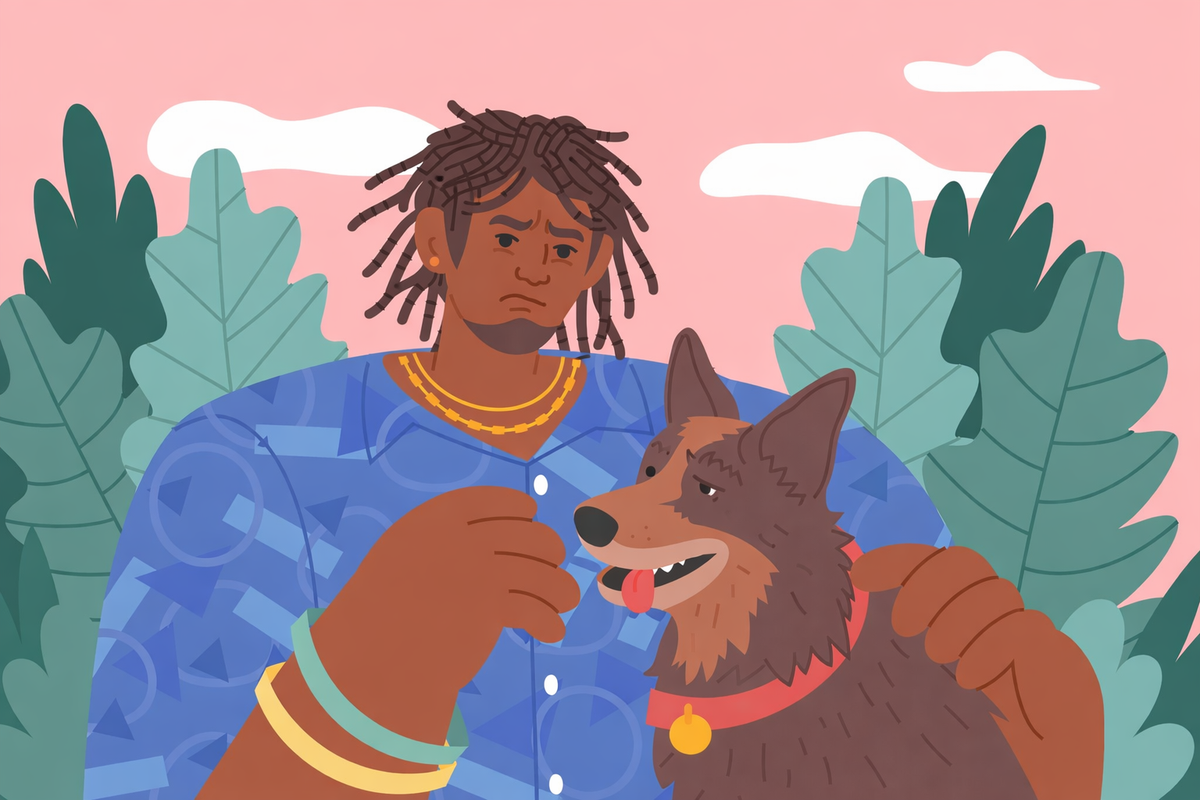
A nationally representative survey of bereaved pet owners found that 74.7% mourned entirely in private — deliberately concealing their grief to avoid social judgment. Men are disproportionately represented in that number. Not because men grieve less, but because they're given even less permission to grieve openly than women — and when the loss is a pet, the permission drops to nearly zero.
The Harvard/Massachusetts General Hospital study (Crawford et al., 2020) found something that surprises most people: the psychological impact of pet death was more pronounced in boys than girls. The effect was measurable for three or more years. If pet loss hits boys harder — and those boys grow into men who are culturally trained to suppress exactly this kind of grief — the result is a population carrying an enormous amount of unprocessed pain with almost no outlet for it.
This post is for the men who are grieving a pet and don't know where to put it. It's also for the women, partners, and friends trying to understand why the man in their life seems fine — and probably isn't.
Men Grieve Differently. That Doesn't Mean They Grieve Less.
Grief researchers Doka and Martin (2010) identified two broad grief styles that exist on a spectrum, not in rigid categories:
Intuitive grievers process grief primarily through emotion — crying, talking, sharing feelings, seeking comfort from others. This style is culturally coded as "normal" grieving and is more commonly associated with women (though not exclusively).
Instrumental grievers process grief primarily through action — problem-solving, physical activity, helping others, focusing on logistics, channelling grief into doing rather than feeling. This style is more commonly associated with men (though not exclusively).
Neither style is healthier. Neither is more "real." They're different processing modes, and most people use elements of both. The problem isn't the style — it's that society only recognises one of them as legitimate grief. When a man responds to his dog's death by going for a long run, cleaning the garage, or quietly handling the cremation logistics without crying, the people around him may conclude he's "handling it well" or "wasn't that attached." In reality, he may be processing one of the most painful experiences of his life — just not in a way that looks like grief to other people.
Research consistently finds that women report more intense grief after pet loss. But this finding comes with a critical caveat: grief studies are overwhelmingly based on self-report questionnaires, and the samples typically skew 75–85% female. Men are less likely to participate in grief research, less likely to score high on emotional expression scales, and less likely to frame their experience as "grief" even when that's exactly what it is. The measurement captures expression, not necessarily intensity.
What we do know is that men report feeling equally close to their pets as women do. If attachment levels are comparable but expression levels are lower, the grief isn't absent — it's buried.
The Double Silence
Men grieving a pet face a unique intersection of two stigmas.
Stigma one: "Men don't cry." The cultural expectation that men should be stoic, composed, and emotionally self-contained doesn't disappear during grief — it intensifies. Crying after a human death is reluctantly tolerated. Crying after a pet's death, for a man, is doubly impermissible. The message from every direction is: control yourself.
Stigma two: "It's just a pet." The RSPCA's 2025 survey found that only 6.9% of bereaved pet owners felt society takes their grief seriously. For men, this number is likely even lower — because the intersection of "men shouldn't be emotional" and "pets aren't worth being emotional about" creates a space where there is quite literally no socially acceptable way to grieve.
The result is the double silence: men hide their grief from others because it's a pet, and they hide it from themselves because they're men. Research on disenfranchised grief shows that this kind of invalidation — both external and internalised — actively worsens grief outcomes, prolonging suffering and driving it underground where it becomes depression, irritability, withdrawal, and substance use.
What Men's Pet Grief Actually Looks Like
If you're a man grieving a pet, you may not recognise your experience as grief because it doesn't match the cultural template. Here's what it often looks like in practice:
Irritability and a short fuse. You're snapping at people. Things that normally wouldn't bother you are intolerable. The frustration feels disproportionate to whatever triggered it. This isn't a personality change — it's grief without a sanctioned outlet. The emotion has to go somewhere, and anger is the one feeling men are culturally permitted to express.
Withdrawal. You pull back from social situations. You don't want to talk about it. You don't want to be around people who might ask what's wrong. The isolation feels protective — but isolation and grief are a dangerous combination, because grief thrives in silence.
Physical symptoms without explanation. Sleep disruption. Appetite changes. Fatigue. Headaches. Difficulty concentrating. You might attribute these to stress, overwork, or "just being tired." They may be grief living in your body because it's not being processed anywhere else.
Channelling into action. You throw yourself into work. You clean the house. You exercise harder than usual. You handle the cremation logistics with calm efficiency. From the outside, you look functional. From the inside, you're running from something you don't know how to sit with.
Drinking more. Research on grief and substance use identifies alcohol as a common coping mechanism when emotional expression feels blocked. If you've noticed your drinking has increased since your pet died — even slightly — that's worth paying attention to.
A delayed reaction. You seem fine for weeks and then something breaks through: you find their leash in the back of the closet, or you hear a dog bark that sounds like theirs, or a random song comes on. The wave that hits catches you off guard because you thought you'd already dealt with it. You didn't deal with it. You postponed it. And grief charges interest.
The Pet Bond Is Often Different for Men
This is speculative, but it resonates with clinical observations and what men themselves report: for many men, the relationship with their pet may have been one of the only spaces in their life where they were emotionally unguarded.
With partners, there are expectations. With friends, there's posturing. With colleagues, there's performance. With a pet, there was none of that. The dog didn't care about your job title. The cat didn't need you to be funny or competent or composed. The pet just wanted to be near you. They were the one relationship in which you were fully yourself — unedited, unpressured, emotionally present in a way you may not have been anywhere else.
When that relationship ends, the loss isn't just the animal. It's the loss of the one space where you didn't have to perform. And because the relationship was private — because men don't typically talk about how much their cat means to them — the grief is equally private. Nobody understands what you lost because nobody knew what you had.
What Helps
Name it to yourself
You don't have to say it out loud to anyone else. But say it to yourself: "I am grieving. This is grief. This hurts." The act of internally acknowledging what's happening — instead of calling it stress, tiredness, or a bad week — gives the experience its proper weight. You can't process something you won't name.
Find one person
You don't need a support group. You don't need to post on social media. You need one person who won't judge you — a partner, a friend, a sibling, a colleague who gets it. Saying "I'm having a hard time since my dog died" to one trusted person can release enough pressure to prevent the grief from building into something harder to manage.
If you don't have that person in your life, anonymous options exist. Reddit's r/Petloss community has thousands of men who have posted about their grief. The Pet Compassion Careline (1-855-245-8214) is available 24/7 — you don't need to give your name, and the clinicians are experienced with exactly this kind of call.
Don't fight the instrumental style — but add to it
If your instinct is to handle grief through action — building something, fixing something, exercising, working on logistics — that's a valid processing mode. You don't need to force yourself to cry. But action alone can become avoidance if it's the only coping mechanism. Pair the doing with even a small amount of reflective processing: write a few sentences about your pet. Look through photos for five minutes before bed. Talk about one memory with someone who knew them. The combination of action and reflection is more effective than either alone.
Move your body
This isn't generic wellness advice. Exercise is one of the most effective grief-processing tools for instrumental grievers. A hard run, a long walk, lifting weights — physical exhaustion can release emotional tension in a way that talking doesn't always achieve. Multiple grief counsellors specifically recommend physical activity for men who struggle with verbal emotional processing. The movement doesn't replace the grief. It gives it a physical outlet while your mind works on it in the background.
Let the grief bursts happen
At some point, something will break through. You'll be driving and a song will come on. You'll find their collar in a jacket pocket. You'll come home and reach for the door in that specific way you used to because they'd be right there. When the wave hits, don't fight it. Pull over. Sit down. Let it crest. Grief bursts typically peak within 10–20 minutes. They're not a sign of weakness. They're the grief you postponed, arriving on its own schedule.
Know when it's more than grief
If weeks turn into months and the drinking hasn't stopped, the sleep hasn't returned, the irritability has become a permanent feature, or you're withdrawing from everything and everyone — that's no longer "just grief." That may be depression, and depression is a medical condition that responds to treatment.
Seeing a therapist is not a failure of masculinity. It's the same practical problem-solving approach you'd apply to anything else that wasn't working. In the GTHA, Koryn Greenspan at The Parted Paw specialises in pet loss bereavement. Your family doctor can refer you to a therapist if you're not sure where to start. And if you're in crisis — if the grief has become something darker — call 9-8-8 (Canada's Suicide Crisis Helpline, available 24/7). Clinical research documents that pets serve as protective factors against suicide, and their death can remove that protection suddenly. This is not hypothetical. It happens. Asking for help is the strongest thing you can do.
For the People Around Him
If you're reading this because a man in your life lost a pet and you're not sure how to help — or you're wondering why he seems fine when you know he shouldn't be — here's what might be useful.
He probably isn't fine. The composure may be real — or it may be performance. Men are trained from childhood to contain emotional distress, and that training doesn't switch off for grief. If he's quieter than usual, more irritable, drinking slightly more, sleeping differently, or throwing himself into work — those may be the only visible signs. They're enough to warrant a check-in.
Don't push him to talk, but open the door. "I know you loved [pet's name]. I just want you to know I take that seriously, and I'm here if you ever want to talk about them." Then drop it. Don't bring it up again unless he does. The door is open. He knows where it is. Pushing harder will trigger the performance mode, not the real conversation.
Don't say "be strong" or "man up." These phrases are always harmful. In the context of grief, they're actively dangerous — they reinforce the exact suppression that turns manageable grief into depression and substance use.
Acknowledge the relationship specifically. "I know [pet's name] was your buddy" or "I remember how [pet's name] would always greet you at the door." Using the pet's name and referencing a specific detail says more than any generic condolence. For men who aren't used to having their emotional lives witnessed, being seen in this specific way can be quietly profound.
Don't be surprised by a delayed reaction. He may seem completely composed for weeks and then one evening fall apart. This isn't a breakdown — it's the grief arriving on its own timeline, after the defences have finally lowered enough to let it in. If it happens, don't panic. Don't try to fix it. Just be present.
Check in later. The most important support often comes at the two-week and one-month mark, when everyone else has forgotten. A text — "Hey, I've been thinking about you. How are you doing, really?" — at the point when no one else is asking anymore can be the thing that keeps him from disappearing entirely into silence.
Frequently Asked Questions
Is it normal for a grown man to cry over a pet? Yes. The idea that men shouldn't cry is a cultural norm, not a psychological truth. Crying is a physiological stress-release mechanism — it lowers cortisol and activates the parasympathetic nervous system. It is a sign that your body is processing something significant. If you cried, your body was doing exactly what it needed to do.
I didn't cry at all. Does that mean I don't care? No. Absence of tears doesn't indicate absence of grief. Instrumental grievers process through action, not emotion — and that's a legitimate, well-documented grief style. If you handled the cremation logistics, cleaned out their things, went for a run, or threw yourself into work, you were grieving. It just didn't look like what most people expect grief to look like.
My friends made fun of me for being upset. How do I handle that? Their response is about their own discomfort with vulnerability, not about the legitimacy of your grief. You have two options: educate them ("Actually, research shows pet grief can be as intense as losing a family member") or protect yourself by not sharing with people who aren't equipped to hear it. Not everyone deserves access to your pain.
I lost my pet months ago and I still think about them every day. Is that normal? Yes. Research shows that 35% of pet owners still have active grief symptoms at six months and 22% at one year. Thinking about your pet daily is not a sign of a problem — it's a sign of how meaningful the relationship was. The question isn't whether you think about them, but whether the thoughts are primarily warm or primarily distressing. If they've become mostly warm with occasional pangs of sadness, that's integrated grief. That's healthy.
I don't want to talk to a therapist. Are there other options? Yes. Writing is one of the most effective grief-processing tools for people who don't want to talk. Write about your pet — their life, their personality, the funniest thing they ever did. You don't have to share it. Physical activity helps. Online communities like r/Petloss are anonymous and judgement-free. The Pet Compassion Careline (1-855-245-8214) is a phone call, not a therapy commitment — you can call once, talk for fifteen minutes, and never call again. Whatever works for you is the right approach.
My partner is grieving a pet and I don't know how to help. Use the pet's name. Acknowledge the loss as real. Don't say "it was just a pet" or "you'll be fine." If he's an instrumental griever, offering to help with practical tasks (returning unused medication, cancelling subscriptions, handling the cremation logistics) may be more useful than asking him to talk about his feelings. Check in at the two-week and one-month mark. And if you notice sustained changes in mood, sleep, drinking, or social engagement beyond a few months, gently suggest he talk to someone.