Pet Loss and Relationships: When You and Your Partner Grieve Differently
You lost the same pet. You made the decision together. And now you're grieving in completely different ways — one of you cries every day, the other seems fine. Why this gap happens and how to navigate it without it breaking the relationship.
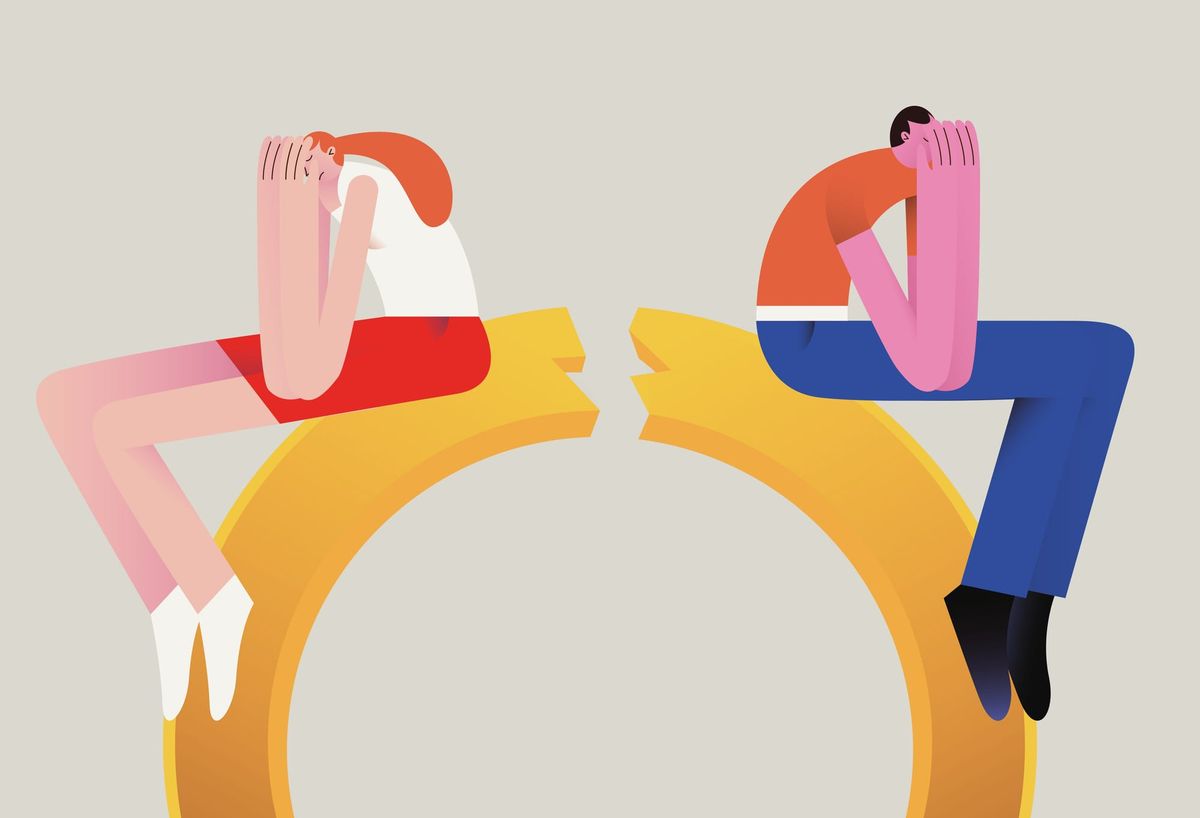
You lost the same pet. You lived in the same house. You made the decision together — or one of you made it while the other wasn't ready. And now you're grieving in completely different ways, at completely different speeds, with completely different needs. One of you cries every day. The other seems fine. One of you wants to talk about the pet constantly. The other changes the subject. One of you wants to adopt again immediately. The other can't imagine it.
This gap — the gap between how you grieve and how your partner grieves — is one of the most common but least discussed consequences of pet loss. Research on caregiver burden identifies family disagreement about euthanasia timing and care intensity as a primary source of relationship conflict during a pet's decline. But the conflict doesn't end when the pet dies. It often intensifies — because the grief styles that were merely different during caregiving become visibly, painfully incompatible during bereavement.
This guide is for the couple who loved the same animal and can't understand why the other person is grieving the way they are.
Why You Grieve Differently
Grief styles exist on a spectrum
Grief researchers Doka and Martin (2010) identified two broad grief styles that most people lean toward — not as rigid categories, but as tendencies on a spectrum:
Intuitive grievers process grief primarily through emotion. They cry. They talk about the loss. They seek comfort from others. They need to express what they feel in order to process it. Withholding emotion feels like suppression. They may interpret their partner's composure as indifference.
Instrumental grievers process grief primarily through action. They channel grief into doing — cleaning, organising, handling logistics, solving problems, exercising. They may not cry much. They may seem focused and functional. This isn't avoidance — it's a legitimate processing mode. They may interpret their partner's emotional expression as excessive or unstable.
Most people have elements of both styles, but lean more strongly toward one. The critical insight is: neither style is healthier, more "real," or more loving than the other. They are different routes to the same destination. The dog who was loved equally by both of you produced equal grief in both of you — it just doesn't look the same coming out.
Attachment to the pet was probably different
Even in the same household, each partner's relationship with the pet was unique. One of you may have been the primary caregiver — the person who fed, walked, administered medication, and got up at 3 AM for the bathroom trips. The other may have been the affection provider — the lap, the couch companion, the weekend hiking partner. One of you may have worked from home with the pet all day. The other saw them for a few hours each evening.
Research consistently shows that the intensity of grief is driven by the closeness of the relationship — and closeness isn't measured by who loved the pet more. It's measured by how central the pet was to your daily life, your routines, your emotional regulation, and your identity. The partner who was home all day with the dog may grieve more intensely — not because they loved the dog more, but because the dog structured more of their daily existence.
This difference in intensity is not a reflection of love. It's a reflection of exposure. And misinterpreting it — "you're not as upset as I am, so you must not have loved them as much" — is one of the most damaging conclusions a couple can reach.
One of you made the decision
In many households, the euthanasia decision is not equally shared. One partner may have been more involved in the vet conversations, more attuned to the pet's decline, more present during the final days. That partner carries the weight of having said "yes" — and may carry corresponding guilt. The other partner may have agreed but deferred, or may have disagreed but not felt heard, or may have been absent when the decision was made.
Research on euthanasia and grief shows that owners who felt excluded from the euthanasia decision experienced more intense grief and regret. In a partnership, exclusion can happen even without intent — if one person was at the vet when the conversation happened, if one person was too emotional to participate, if one person was travelling. The partner who feels excluded may later express anger, resentment, or accusations of premature action — not because the decision was wrong, but because they weren't part of making it.
One of you may have been the caregiver
If one partner bore the majority of the caregiving burden — the medications, the 3 AM cleanups, the vet appointments, the emotional vigilance of watching the decline — they may experience grief differently from the partner who witnessed the decline but didn't carry it daily.
The primary caregiver may feel relief alongside grief — relief that the exhausting, consuming work of keeping the pet comfortable is finally over. This relief often triggers guilt, which triggers secrecy (not wanting to admit the relief to a partner who is purely devastated), which triggers distance. The non-caregiving partner, meanwhile, may not understand why the caregiver seems less destroyed — when in reality, the caregiver may have done much of their grieving during the months of decline, while the non-caregiver's grief is arriving all at once.
For more on how caregiving depletes the person providing it, see our [guide to caregiver fatigue].
The Most Common Conflicts
"You're not sad enough"
The intuitive griever watches their partner go back to work on Monday, function at dinner, and make small talk with friends — and concludes that the partner didn't love the pet. The instrumental griever is doing all of those things while carrying grief internally — processing through action, routine, and structure — and feels unseen and unfairly judged.
What's actually happening: Both people are grieving. One shows it externally. One processes it internally. The visible difference is not a difference in depth — it's a difference in expression.
"You're too upset"
The instrumental griever watches their partner cry every day for weeks, unable to go into the room where the pet died, unable to look at photos, and becomes worried — or impatient. They may say things like "it's been a month" or "we need to move forward" or "I'm worried about you." The intuitive griever hears these as dismissal — as being told their grief is excessive, that they're broken, that they need to perform recovery on someone else's timeline.
What's actually happening: The instrumental griever may be genuinely concerned — confusing emotional expression with emotional crisis. Or they may be uncomfortable with the intensity of the grief because it threatens their own containment strategy. Either way, imposing a timeline on someone else's grief is harmful — even when it comes from a place of care.
"You made the decision without me"
If one partner was more involved in the euthanasia decision — whether by circumstance or by choice — the other may feel a retroactive sense of powerlessness. This can surface as: "You didn't give them enough time." "You should have tried harder." "I wasn't ready." "You didn't ask me."
What's actually happening: This is often grief looking for a target. The partner who was less involved didn't have the daily clinical data, the vet conversations, the quality-of-life scores — but they feel the loss just as acutely. The anger at the decision is often anger at the situation, redirected at the person who was closest to it.
"I want another pet" / "I can't even think about another pet"
Timing around a new pet is one of the most common sources of post-loss tension in relationships. Research shows that 67% of bereaved owners adopted a new pet within three months — and that the most attached owners were often the fastest. But "fast" for one partner may feel like betrayal to the other.
The partner who wants a new pet may be seeking to restore the structure, companionship, and routine that made their life work. The partner who resists may feel that getting a new pet dishonours the one who died — or that they're simply not ready. Both positions are valid. Neither is wrong. But if one person unilaterally adopts without the other's genuine readiness, the new pet enters a household already under emotional strain — which isn't fair to the animal or to the relationship.
For guidance on this decision, see our [guide to getting a new pet after loss].
What Helps
Name the difference without ranking it
The single most useful thing you can do is say out loud: "We're grieving the same loss differently. Neither of our ways is wrong." This removes the implicit competition — the unspoken question of who loved the pet more, who is handling it better, who is the "right" kind of sad.
Ask your partner what they need — and believe the answer
"What do you need from me right now?" is a question most grieving couples never ask directly. The answers may surprise you:
- "I need you to let me cry without trying to fix it."
- "I need you not to bring it up for a few days — I'm processing on my own."
- "I need you to say their name. I feel like you've erased them."
- "I need you to be okay with me going for a run instead of sitting with the grief."
- "I need you to stop asking if I'm okay — it makes me feel like you think I should be over this."
Believe whatever your partner says. Don't interpret it through your own grief style. If they say they need space, give space — even if your instinct is to talk. If they say they need to talk, listen — even if your instinct is to act.
Use a quality-of-life scale retrospectively
If the euthanasia decision is a source of conflict — "you did it too soon" / "you should have done it sooner" — going back through a quality-of-life scale together can reframe the disagreement. Score the pet's final week collaboratively using the Villalobos HHHHHMM Scale. Seeing the objective data — the pattern of decline, the pain, the loss of function — often resolves what words alone cannot. The data is neutral ground.
Don't police each other's grief timeline
There is no schedule. Research shows that 35% of pet owners still have active grief symptoms at six months and 22% at one year. If your partner is still crying at three months and you've integrated the loss by six weeks, neither of you is on the wrong timeline. The goal isn't to grieve at the same speed — it's to give each other room to grieve at your own.
Grieve together at least once
Even if your grief styles are very different, finding one shared moment of grief — looking at photos together, visiting the spot where ashes were scattered, telling each other your favourite memory — creates a shared reference point. It says: "We both lost something. We're both in this." You don't need to grieve the same way. But you need to grieve in the same room at least once.
Create a shared memorial
A ritual that both partners participate in — planting something in the garden, framing a photo, lighting a candle at dinner, making a donation in the pet's name — externalises the grief into a shared object or practice. It becomes the place where both grief styles meet. The intuitive griever gets the emotional resonance. The instrumental griever gets the action. The pet gets remembered by both.
When It Becomes More Than Grief
Sometimes the conflict isn't really about the pet. The pet's death — and the different ways you're handling it — can surface pre-existing relationship tensions that were being managed (or masked) by the daily routines of pet care.
Watch for:
- Sustained anger or blame that doesn't soften over weeks
- Withdrawal from the relationship (not just from social life generally)
- Contempt — the feeling that your partner's grief is ridiculous or that they're performing it
- One partner weaponising the pet's death in unrelated arguments
- Loss of trust — the sense that you fundamentally can't rely on this person during a crisis
If the pet's death has exposed something deeper, couples counselling is appropriate — and it's not an overreaction. Grief is one of the highest-stress experiences a relationship can undergo. Seeking help isn't a sign that the relationship is failing. It's a sign that you're taking the relationship seriously enough to protect it.
For the Partner Who "Seems Fine"
If you're the one who went back to work, who isn't crying, who seems to have moved on — and your partner is looking at you like you're made of stone — this section is for you.
You're not fine. Or maybe you are — and that's okay too. Grief doesn't require a specific emotional performance. But if you're carrying grief internally and your partner can't see it, the gap between your experience and their perception will damage the relationship unless you bridge it.
Say something. Even if it's brief. Even if it's not emotional. "I miss them too. I just process it differently." That sentence — offered without being asked — can prevent weeks of resentment.
Show it in your own way. You don't have to cry. But you can light the candle. You can hang the photo. You can say the pet's name. You can tell your partner a memory you haven't shared. These actions — small, concrete, visible — communicate grief without requiring you to perform an emotional style that isn't yours.
Don't rush your partner. Your timeline isn't theirs. If you're ready to adopt again and they're not, wait. If you've integrated the loss and they're still in active grief, don't interpret their pain as pathology. Give them what you'd want if the roles were reversed: patience without judgment.
For the Partner Who "Can't Stop Grieving"
If you're the one who cries every day, who can't enter the room, who feels like the world ended — and your partner seems unaffected — this section is for you.
Your grief is not excessive. Research confirms that pet loss can be as intense as losing a close human relationship, and the intensity is driven by the closeness of the bond. If you were the primary caregiver, the primary companion, the one who structured your entire day around the pet — your grief is proportionate.
Don't interpret your partner's composure as indifference. They may be grieving through action, through work, through routine — processing internally what you're processing externally. Their way is not better or worse. It's different.
Tell your partner what you need specifically. "I need you to sit with me while I cry" is clearer than radiating sadness and hoping they respond correctly. "Please don't suggest getting a new pet yet" is clearer than resenting them for bringing it up. Grief makes communication harder, but specificity makes it possible.
If your grief is interfering with daily functioning for more than a few months, consider individual support — a grief counsellor, a support group, or a therapist familiar with pet loss. This isn't because your grief is wrong. It's because you deserve support that your partner — grieving in their own way — may not be able to provide. See our [complete guide to coping with pet loss] for resources.
Frequently Asked Questions
My partner made the euthanasia decision without consulting me. How do I move past the anger? This is one of the most painful relationship dynamics after pet loss. Start by understanding the context: your partner likely made the decision under extreme emotional and time pressure, possibly with veterinary guidance that pointed clearly toward euthanasia. They may not have excluded you deliberately — they may have been protecting you, or simply acting in a moment when action was needed and you weren't available. Express your feelings directly — "I wish I'd been part of that decision" — without accusing. Then ask to hear their perspective: what the vet said, what the pet looked like, what the quality-of-life score was. Understanding their experience often transforms anger into shared grief.
One of us wants to get another pet and the other doesn't. How do we resolve this? Take the slower timeline. A new pet introduced into a household where one partner isn't ready creates resentment and an unfair environment for the animal. Have the conversation openly: "What would need to change for you to feel ready?" Revisit it monthly. Consider fostering as a compromise — it provides animal companionship without permanent commitment. The partner who is eager should understand that readiness is emotional, not calendrical. The partner who is resistant should understand that wanting a new pet isn't a betrayal of the old one.
Is it normal to fight more after a pet dies? Yes. Grief stresses every system, including relationships. You're both depleted, both processing, and both lacking the emotional reserves that normally buffer disagreements. Most couples report that conflict peaks in the first month after loss and gradually decreases as grief integrates. If the fighting doesn't decrease — if it escalates or expands into areas unrelated to the pet — consider couples counselling. Grief doesn't cause relationship problems, but it can expose ones that were already there.
My partner didn't cry at all. Should I be worried? Not necessarily. Absence of tears doesn't indicate absence of grief. Instrumental grievers process through action rather than emotion — and their grief is equally real. However, if your partner shows no grief response of any kind — no sadness, no change in behaviour, no acknowledgement of the loss — a gentle check-in is warranted: "I notice you haven't talked much about [pet's name]. I want to make sure you're okay." The answer may reveal private grief they're not showing you.
How do I grieve with my partner when we're so different? You don't have to grieve the same way. You have to grieve alongside each other. Find one shared practice — lighting a candle, looking at photos, visiting the ashes, saying the pet's name before dinner — that both of you can participate in, even if your internal experiences of it are completely different. The shared ritual creates connection. The rest of the grief can be processed individually, in your own style, at your own pace.